
When shopping for a CBD cream or gel, most people ask:
“How many milligrams of CBD does it contain?”
But the better question is:
“How does this CBD absorb through the skin?”
Because when it comes to CBD topical effectiveness, delivery matters more than dosage.
At Basic Jane, we spent years studying CBD carrier molecules and skin absorption science — and what we learned changed how we formulate every product.
Why Your Skin Blocks Most CBD
Your skin is one of the most powerful protective barriers in the body.
Its outer layer (the stratum corneum) is designed to:
- Prevent water loss
- Block environmental toxins
- Stop most substances from entering
Simply adding CBD to a lotion does not guarantee absorption.
If a formulation isn’t designed with penetration enhancers, cannabinoids may remain near the surface — no matter how high the milligram number.
This is why CBD cream vs transdermal patch is not just a format difference — it’s a delivery system difference.
What Are CBD Carrier Molecules?
Carrier molecules (also called penetration enhancers) help cannabinoids cross the outer skin barrier and reach tissue beneath.
Effective cannabinoid delivery systems must account for:
- Lipid solubility
- Thermodynamic activity
- Skin partitioning
- Stability thresholds
- Irritation balance
Without the right carriers, higher concentrations do not equal better results.
In fact, cannabinoids plateau at certain concentrations. Beyond that, additional milligrams may not increase absorption — meaning consumers can end up paying more without improved performance.
The Problem With “High Milligram” Marketing
You may have seen products claiming 10,000 mg CBD, 20,000 mg CBD and “Ultra-potent” topical formulas.
But here’s the reality:
- CBD has solubility limits.
- At high ratios, pure CBD can crystallize.
- Absorption depends on formulation science, not label size.
The cannabinoid industry is drifting toward a quantity race — but CBD skin absorption depends on chemistry, not marketing numbers.
CBD Topical vs Transdermal: What’s the Difference?
Understanding the difference between topical CBD products and transdermal CBD systems is critical.
Topical CBD (Creams, Gels, Oils, Sprays)
Designed for:
- Localized discomfort
- Surface-level irritation
- Targeted areas (hip, knee, shoulder)
Topical CBD works primarily at or near the site of application.
Best for muscle soreness, joint irritation and post-exercise recovery.
Transdermal CBD (Patches)
Designed to:
- Penetrate deeper layers
- Provide sustained release
- Potentially support systemic exposure depending on placement
For example, transdermal products placed near venous areas may allow broader uptake compared to standard creams.
Transdermal systems are often explored for deeper tissue discomfort, sustained release needs and menstrual pain support.
How Basic Jane Formulates for Absorption
We identified five distinct CBD penetration enhancer strategies across our product line.
Menthol helps increase skin permeability while selected plant-based essential oils support transition across the lipid barrier.
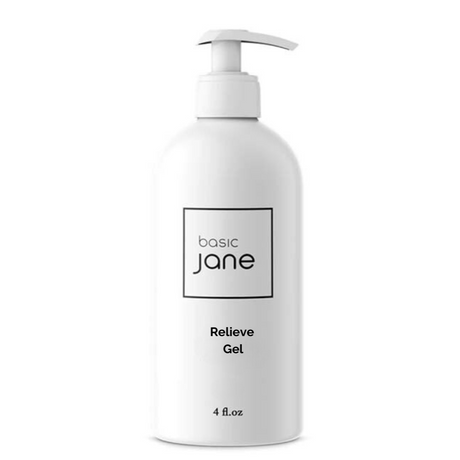
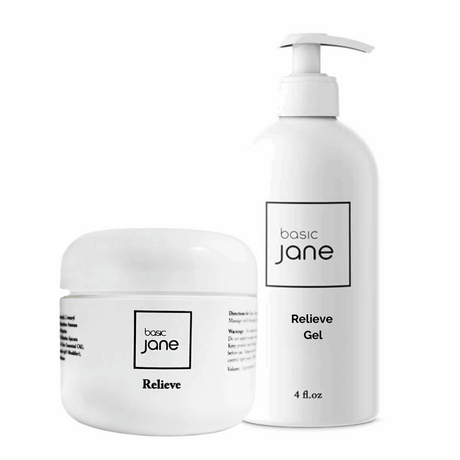
MSM (methylsulfonylmethane) is a naturally occurring sulfur compound often used in joint-support products. In gel systems, it supports delivery in lightweight formulations.
Alcohol is one of the most effective cannabinoid carriers. It enhances solubility and promotes rapid absorption.
🫒 CBD Essential Oil Blend: Oleic Acid (Grapeseed Oil)
Oleic acid can increase membrane fluidity and support lipid-phase transfer across the skin.
🩹 Transdermal Patches: Peppercorn + CoQ-10
Our patch system uses a proprietary blend to enhance deeper penetration and sustained delivery.
Each formula is designed for specific skin interaction — not just high cannabinoid load.
Why Cannabinoids Plateau in Topical Systems
Through testing and reformulation, we found:
- Cannabinoids reach a saturation threshold in topical systems.
- Increasing CBD beyond certain ratios does not proportionally increase absorption.
- Stability and solubility matter as much as dosage.
In short:
Topical cannabinoids are about delivery efficiency, not sheer quantity.
How to Choose an Effective CBD Topical
Instead of asking:
“How much CBD is in this?”
Ask:
- What carrier molecules are used?
- Is it topical or transdermal?
- Is the formula stable?
- Is it manufactured under cGMP standards?
- Is it designed for localized or deeper delivery?
These questions better predict performance than milligram counts alone.
Resetting the CBD Conversation
The future of cannabinoids isn’t about “more.”
It’s about:
- Mechanism
- Stability
- Delivery science
- Intelligent formulation
As consumers become more educated about CBD skin absorption and penetration enhancers, the industry will shift from potency marketing to performance-based design.
At Basic Jane, we formulate around one core principle:
If cannabinoids are going on your skin, they should be engineered to get where they need to go.
Frequently Asked Questions
Does more CBD in a cream make it stronger?
Not necessarily. CBD absorption depends on formulation and carrier molecules. Higher milligrams do not guarantee deeper penetration.
What helps CBD absorb through the skin?
Penetration enhancers such as menthol, alcohol, MSM, oleic acid, and specialized transdermal systems can support absorption.
What’s the difference between topical and transdermal CBD?
Topical CBD works locally at the surface. Transdermal systems are designed for deeper penetration and sustained release.
Is transdermal CBD stronger than topical?
Not stronger — just designed for a different delivery pathway.