Leafly

Leafly

Basic Jane |

Jessica Tonani didn’t set out to be a cannabis evangelist. A friend recommended she try medical marijuana to alleviate a gastrointestinal disorder, and after she found it helped stimulate her appetite and reduce nausea, other patients began asking for tips. At the time, Tonani was at a loss. “I told my physician, he talked to other physicians, and a lot of people were calling me for advice,” she recalled. “But I didn’t have any answers for people.”

Some who contacted her had found success with cannabis in the past but then couldn’t replicate the same effects. “I had people tell me, ‘I haven’t been able to enjoy dinner out with my family [before trying cannabis], but the next time I did, it didn’t work,’” Tonani said. “They were crying to me and asking, ‘How do I find the same thing?’”

Tonani, now the CEO of Verda Bio, is now in a unique position to be able to answer that question. Last month the Seattle-based biotechnology firm became the recipient of Washington state’s first-ever cannabis research license.

Demystifying cannabis strains and learning to navigate their effects really comes down to understanding their chemical components, she said. Engineering strains for specific effects, then, becomes an agricultural question: How do we breed these plants for higher amounts of specific molecules?

To address that question, Verda Bio plans to begin by selectively breeding cannabis plants for specific compounds in cannabis, including less common cannabinoids such as THCV, CBDV, CBG, and CBC. These compounds are associated with certain qualities, or “indications,” that people already seek out in the medical cannabis market. Tonani, for instance, has a personal interest in indications associated with treating GI disorders, such as anti-nausea properties. “That’s why CBC is on the list, because CBC really helps with GI motility,” she said.

“Since it’s not being done on a federal level, the Legislature took steps to try and fill that gap at least a little bit.”

Through several rounds of selective breeding at Verda’s cultivation facility in Seattle, Tonani’s team hopes to create plants that naturally produce high levels of certain compounds, ideally making sure specific effects are more consistently accessible to consumers.

“We’ll be one of the only growers in the state that’s growing male plants,” she said, explaining that most growers prefer female plants, which are responsible for producing the cannabinoid-rich buds sought after by patients and consumers. “But we’ll take a female and male plant that maybe produces certain compounds at low levels, and we will breed them, produce seeds, and select the seeds that have a little bit higher content of whatever compound it is we’re looking at.”

The process is then repeated over and over again. “That breeding cycle can take four or five years,” Tonani said.

It’s a long time to wait, but patience is already one of Verda Bio’s virtues. Approval of the company’s cannabis research license took almost five years and entailed a complex effort to rewrite the law around cannabis research in Washington state.

“We actually approached the Washington Liquor and Cannabis Board (LCB) back in 2014, right after [legalization] passed,” Tonani said. “Originally, we were going to apply for a producer–processor license and we thought we could do research under that.”

But Verda isn’t a typical producer–processor. At the time, Washington state law granted producer–processor licenses only if the licensee planned to either sell or destroy the marijuana plants they were using. Verda Bio wasn’t planning to do either.

“We had some questions about some of the applications and how we would essentially account for the fact that we weren’t going to sell cannabis but keep it in-house and research it,” she said.

The LCB had questions, too. “What took so long for this license to get off the ground is that it’s unlike anything else that we license,” said board spokesperson Mikhail Carptenter. At first, the regulatory agency told Tonani that licensing an entity to grow cannabis for research was downright illegal.

The only way to move forward, the LCB told her, was to change state law. So, with the help of Washington state Sens. Ann Rivers (R-La Center) and Jeanne Kohl-Welles (D-Seattle), Tonani and her team did just that. In 2015, lawmakers passed legislation that would allow Verda Bio to obtain the state’s first cannabis research license—a major victory for the fledgling company.

With the law amended, everything seemed to be going according to plan—until yet another obstacle appeared.

“The original law that helped establish marijuana research licenses went into effect in July 2015,” said Carpenter at the LCB. “However, at that time it was tied to a scientific reviewer that lost their funding, so we didn’t have a scientific reviewer to review the applications, which isn’t something this agency can do.” It took until the following year, 2016, for the Legislature to pass a bill allowing the board to seek a replacement.

The LCB eventually settled on Science Solutions, a consulting firm contracted by the state government to review the validity of marijuana research proposals. In November of this year, Verda’s proposal finally made it through the vetting process.

The company’s goals go beyond breeding new strains. After Verda Bio creates a stable population of plants that exhibit the qualities the company is looking for, it aims to undertake clinical trials.

“We were first and we had questions about how to do it, and I think the LCB had questions, too” she said. “Boxes that didn’t exist when we filled out the paperwork are probably going to be on the paperwork in the future.”

Washington’s LCB also has high hopes. “It’s the first license,” Carpenter said, “so I think you want to be optimistic that it will produce research that can be of value to the industry moving forward.”

https://www.leafly.com/news/science-tech/washingtons-first-ever-cannabis-research-lab-goes-live

 

Frequently Asked Questions

Oral CBD Products

What makes Basic Jane oral products different from other CBD edibles?

Basic Jane oral products are developed out of one of the first state-licensed cannabis research programs in the U.S. Every formula is designed by scientists with a focus on real-world use, consistent dosing, and meaningful results. All oral products are THC-free — so you get the benefits of cannabinoids without any psychoactive effects or concerns about drug testing.

Do Basic Jane oral products contain THC?

No. All Basic Jane oral products are 100% THC-free and are legally sold under the 2018 Farm Bill. They will not get you high and are designed for clear-headed, everyday wellness.

Which oral product is best for general pain and inflammation relief?

It depends on what you need! CBD Mints are a great everyday starting point — low-dose, gentle, and appropriate for any time of day. For stronger inflammation relief, Boost Mints contain both CBD and CBDA (the raw form of CBD), which provides an added boost for more significant discomfort. Both work systemically, meaning they support your whole body — not just one area.

What is the difference between CBD Mints and Boost Mints?

CBD Mints contain 5 mg of CBD per mint — a perfect microdose for consistent, all-day support. Boost Mints contain both CBD and CBDA for extra inflammation relief. Think of CBD Mints as your everyday companion and Boost Mints as your go-to when you need more firepower — particularly after a tough workout, a flare-up, or a harder day.

What are Refresh Chews best for?

Refresh Chews contain CBD, CBG, and terpenes, making them ideal for people who want to power through their day with more clarity and ease. They are designed to help reduce anxiety, support focus and energy, and keep you feeling your best without any jittery side effects. Perfect for busy mornings or an afternoon pick-me-up.

What are Passion Chews and who are they designed for?

Passion Chews are designed specifically for women — particularly post-menopausal women — to help them feel present, connected, and in the moment when they want to. They are thoughtfully formulated with women's hormonal health in mind and designed to support intimacy and overall well-being.

What are Night Caps and are they CBD?

Night Caps are actually cannabinoid-free. Instead, they contain a blend of hops (Humulus lupulus) and valerian (Valeriana officinalis) — two botanicals with a long history of traditional use as natural sleep aids. They are non-habit-forming and designed to help you wind down, fall asleep, and wake up refreshed. A wonderful option for anyone who prefers to keep their sleep routine free of cannabinoids.

Which oral product is best for sleep?

Night Caps are Basic Jane's dedicated sleep product and are the first recommendation for anyone struggling to get a good night's rest. Their blend of hops and valerian is non-habit-forming and designed specifically for sleep support. If you are also managing pain that interferes with sleep, pairing Night Caps with a CBD Mint or Boost Mint may provide broader comfort going into bedtime.

Which oral product is best for daytime use?

CBD Mints are perfect for any time of day — subtle, low-dose, and easy to take on the go. Refresh Chews are a standout daytime choice if you want an added edge: the CBD/CBG and terpene blend is designed to keep anxiety at bay and help you feel energized and focused. Both are discreet, minty, and easy to incorporate into your daily routine.

Which oral product is best for workout recovery?

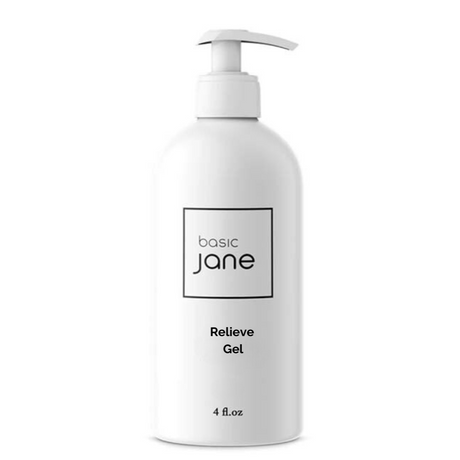
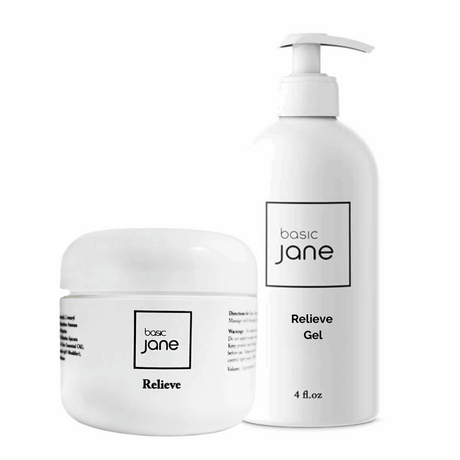
Boost Mints are a great post-workout choice. The combination of CBD and CBDA works systemically throughout the body to support inflammation relief and recovery. Take one to two mints after exercise and give them 30–90 minutes to build. For faster, localized muscle relief right after a workout, consider pairing with a Relieve Cream or Relieve Gel topically as well.

Can I use oral and topical products together?

Yes — and many customers do. Topicals like the Relieve Cream, Relieve Gel, and Pain Sprays target localized areas like sore knees, shoulders, or back, while oral products like CBD Mints and Boost Mints provide systemic, whole-body support. Using both together is one of the most effective approaches for people managing chronic or widespread discomfort.

How Oral CBD Works

How is oral CBD different from topical CBD?

Topical CBD products work locally — you apply them directly to the area of discomfort and they interact with receptors in the skin and underlying tissue. Oral products are absorbed through digestion and work systemically, supporting your whole body rather than one specific area. This makes oral products especially valuable for conditions that are more widespread, internal, or mood- and sleep-related.

How long does it take for oral CBD products to work?

Oral products typically take 30–90 minutes to take effect, depending on your metabolism and whether you have eaten recently. Plan accordingly — they are not a rapid-response product in the way topicals are, but their effects last significantly longer.

How long do the effects of oral CBD last?

Effects from oral CBD products typically last 6–8 hours, making them a great choice for consistent, long-lasting support throughout the day or night.

What is CBDA and why is it in Boost Mints?

CBDA is the raw, unheated form of CBD found in the hemp plant. Research suggests it may have potent anti-inflammatory properties, and when combined with CBD, the two cannabinoids may work synergistically for enhanced effect. That is why Boost Mints contain both — to deliver extra support beyond what CBD alone can provide.

What is CBG and why is it in Refresh Chews?

CBG (cannabigerol) is sometimes called the "mother cannabinoid" because it is the precursor to other cannabinoids. It is being studied for its potential to support mood, energy, and focus. In Refresh Chews, CBG is combined with CBD and terpenes to create a formula specifically designed to help you feel clear-headed, calm, and energized.

Activity and Timing

When is the best time to take CBD Mints?

CBD Mints are designed for any time of day. Many customers take one in the morning as part of their wellness routine, another mid-afternoon, or after activity for recovery. Because each mint is a low 5 mg dose, you can adjust timing and quantity to fit your lifestyle. Start with one and see how your body responds.

When is the best time to take Boost Mints?

Boost Mints are best taken when you need more targeted inflammation support — after exercise, during a flare-up, or when you know a more demanding day is ahead. Because they contain both CBD and CBDA, they are more potent than standard CBD Mints and are ideal when everyday support is not quite enough.

When should I take Night Caps?

Take Night Caps about 30–60 minutes before bed to give the hops and valerian time to take effect. They are designed to help you relax, fall asleep naturally, and stay asleep through the night.